
🐰 Rabbit Age Calculator
Rabbits grow and age much faster than humans, which is why many owners ask, “How old is my rabbit in human years?” or search for rabbit years to human years conversions. Our Rabbit Age Calculator (also known as a Bunny Age Calculator) helps estimate rabbit age in human years using your rabbit’s actual age and breed size, making it easier to understand your pet’s life stage and care needs.
Whether you’re looking for a rabbit years to human years calculator, wondering about bunny years to human years, or trying to calculate bunny age in human years, this tool provides a quick estimate along with helpful information about rabbit growth and aging. Rabbits mature rapidly during their first year, so their aging process is very different from that of humans.
👉 Explore more pet age calculators and rabbit care tools on our homepage.
Many rabbit owners also want to know bunny-to-human years so they can better understand changes in behavior, activity level, diet, and overall health as their pet grows older. Knowing your rabbit’s human-age equivalent can help you make better decisions about nutrition, housing, enrichment, and preventive veterinary care throughout every stage of life.
Why Use a Rabbit Age Calculator?
A Rabbit Age Calculator helps convert rabbit years to human years so you can better understand your rabbit’s development and changing care requirements.
This calculator helps you:
- Convert rabbit years to human years
- Estimate rabbit age in human years
- Understand rabbit life stages
- Monitor age-related health and behavior changes
- Plan proper nutrition and long-term care
- Learn the average lifespan of pet rabbits
Understanding your rabbit’s age stage makes it easier to provide the right diet, housing, exercise, and healthcare throughout its lifetime.
⚙️ How the Rabbit Age Calculator Works
This rabbit age in human years calculator uses rabbit age and breed size to estimate equivalent human age and life stage information.
Rabbit Age
The calculator uses your rabbit’s actual age as the foundation for estimating human age equivalence. Rabbits age rapidly during their early years compared to humans.
Age Unit
You can enter rabbit age in either months or years for more flexibility. Younger rabbits are often measured more accurately in months.
Rabbit Breed Size
Small rabbit breeds generally live longer than giant rabbit breeds. Breed size can slightly affect average lifespan and aging patterns.
The calculator estimates:
- Rabbit age in human years
- Rabbit life stage
- Average lifespan range
- Care recommendations by age
Also, check - Pet Age Calculator & Dog Age Calculator
⚠️ Why Rabbit Age Matters
Nutritional Needs Change with Age
Young rabbits require different nutrition than adult or senior rabbits. Proper feeding supports healthy growth, digestion, and weight management.
Health Risks Increase Over Time
Older rabbits may become more prone to dental issues, arthritis, and mobility problems. Monitoring age helps owners prepare for changing healthcare needs.
Energy Levels May Decrease
Senior rabbits are often less active compared to younger rabbits. Understanding age-related behavior changes helps improve daily care routines.
Preventive Veterinary Care Becomes Important
Routine veterinary checkups become increasingly important as rabbits age. Early detection of health problems can improve long-term quality of life.
🧠 Rabbit Life Stages Explained
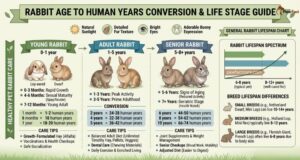
Young Rabbit (Under 1 Year)
Young rabbits grow rapidly during the first year of life and usually have high energy levels. Proper nutrition and socialization are especially important during this stage.
Adult Rabbit (1–5 Years)
Adult rabbits generally maintain stable body weight and activity levels. Balanced nutrition and regular exercise help support a healthy adulthood.
Senior Rabbit (5+ Years)
Senior rabbits may slow down physically and require additional health monitoring. Softer bedding, easier mobility access, and routine vet care become more important.
Related Posts
💡 Tips for Keeping Rabbits Healthy Longer
Provide a Proper Diet
High-quality hay should make up most of a rabbit’s diet because it supports digestion and dental health. Fresh vegetables and balanced pellets can also support nutrition.
Encourage Daily Exercise
Rabbits require space and physical activity to maintain healthy muscles and body weight. Daily movement also helps prevent boredom.
Monitor Dental Health
Rabbit teeth grow continuously throughout life and may require monitoring for overgrowth. Dental issues can affect eating and overall health.
📋 Rabbit Age Conversion Guide
| Rabbit Age | Human Age Equivalent | Rabbit Life Stage | Important Notes |
|---|---|---|---|
| 3 Months | ~8 Human Years | Young Rabbit | Rapid growth stage |
| 6 Months | ~12 Human Years | Young Rabbit | Sexual maturity may begin |
| 1 Year | ~21 Human Years | Adult Rabbit | Fully mature rabbit |
| 3 Years | ~37 Human Years | Adult Rabbit | Stable adult stage |
| 5 Years | ~53 Human Years | Senior Rabbit | Aging signs may appear |
| 8 Years | ~77 Human Years | Senior Rabbit | Extra health care important |
❓ Frequently Asked Questions (FAQs)
1. How old is a rabbit in human years?
Rabbit aging differs from humans’, but the first rabbit year is often considered roughly equal to about 21 human years.
2. How long do pet rabbits live?
Most pet rabbits live approximately 8–12 years, depending on breed, genetics, diet, and overall care quality.
3. Do small rabbit breeds live longer?
Yes, smaller rabbit breeds often live longer than giant rabbit breeds on average.
4. At what age is a rabbit considered senior?
Many rabbits are considered seniors around 5 years of age, though this may vary slightly by breed and health condition.
5. Why should I track my rabbit’s age?
Tracking rabbit age helps owners adjust diet, exercise, and veterinary care based on changing health and life stage needs.
🏁 Conclusion
A Rabbit Age Calculator or Bunny Age Calculator helps rabbit owners better understand aging, life stages, and long-term care requirements. Knowing your rabbit’s estimated human age equivalent can help improve nutrition, health monitoring, and overall quality of life.
Proper age-based care helps rabbits stay healthier, more active, and comfortable throughout every stage of life.