
🐶 Wet Food Feeding Calculator for Dogs
Feeding the correct amount of wet food is important for your dog’s health, energy levels, digestion, and weight management. Our How Much Wet Food to Feed a Dog Calculator helps estimate daily wet food portions based on your dog’s weight, age, activity level, and calorie needs.
Many dog owners ask, “How much wet food should I feed my dog?” because portion sizes can vary depending on breed, metabolism, lifestyle, and food calorie content. Feeding too much may lead to obesity, while underfeeding can affect energy and nutrition.
This wet dog food calculator helps simplify feeding routines and provides estimated daily wet food recommendations for puppies, adult dogs, and senior dogs.
👉 Explore more dog feeding calculators and pet nutrition tools on our homepage.
📊 Why Use a Wet Food Calculator for Dogs?
A dog feeding calculator helps estimate more accurate meal portions instead of relying only on package instructions.
This calculator helps you:
- Estimate daily wet food portions
- Manage healthy dog weight
- Prevent overfeeding
- Calculate calorie intake
- Plan meal schedules more easily
Proper feeding calculations help support healthy growth, muscle condition, and overall wellness.

⚙️ How the Wet Food Calculator Works
This wet food feeding calculator for dogs uses several important factors to estimate your dog’s daily food requirements.
Dog Weight
Body weight is one of the biggest factors affecting how much food a dog needs each day. Larger dogs usually require more calories and larger meal portions than smaller breeds.
Dog Age Group
Puppies, adult dogs, and senior dogs all have different nutritional needs. Puppies generally require higher calorie intake for growth, while senior dogs may need adjusted portions due to lower activity levels.
Activity Level
Highly active dogs burn more calories and may require additional food throughout the day. Less active or indoor dogs usually need smaller portions to maintain a healthy weight.
Calories Per Can or Tray
Different wet dog foods contain different calorie amounts depending on ingredients and brand formulation. Checking calorie content improves feeding accuracy.
The calculator estimates:
- Daily calorie needs
- Wet food cans or trays per day
- Recommended meal frequency
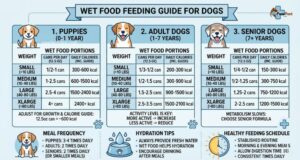
⚠️ Why Proper Wet Food Feeding Matters
Healthy Weight Management
Feeding the correct amount helps maintain a healthy body condition and reduces obesity risk. Excessive feeding over time can contribute to joint stress and other health problems.
Better Hydration
Wet food contains significantly more moisture than dry kibble, helping dogs stay hydrated. This can be especially beneficial for dogs that naturally drink less water.
Digestive Support
Wet food may be easier for some dogs to digest because of its softer texture and moisture content. Balanced meal portions can also help reduce stomach discomfort.
Improved Appetite
Many dogs find wet food more flavorful and appealing than dry food alone. This can help encourage eating in picky eaters or older dogs with reduced appetite.
Check this post - Pet Sitter Rates Calculator
🧠 Wet Food Feeding by Dog Age
Puppies
Puppies grow rapidly and require more calories relative to body size. They often need multiple small meals daily to support healthy growth and development.
Adult Dogs
Adult dogs usually require balanced feeding portions to maintain stable energy levels and healthy body weight. Activity level plays a major role in determining meal size.
Senior Dogs
Senior dogs may become less active and often require adjusted calorie intake to prevent weight gain. Softer wet food may also be easier for older dogs to chew.
You can also check - Raw Dog Food Calculator
💡 Tips for Feeding Wet Food to Dogs
Divide Meals Evenly
Feeding smaller meals throughout the day may improve digestion and help maintain steady energy levels. Puppies especially benefit from more frequent meals.
Check Food Labels Carefully
Wet dog food brands vary significantly in calorie density and nutritional composition. Reading labels helps improve portion accuracy.
Monitor Body Condition Regularly
Watch for signs of weight gain or loss and adjust feeding amounts gradually if necessary. Regular monitoring helps maintain a healthy body condition.
Provide Fresh Water Daily
Even though wet food contains moisture, dogs still require constant access to fresh drinking water. Proper hydration supports digestion and overall health.
Consult Your Veterinarian
Dogs with allergies, medical conditions, pregnancy, or special dietary needs may require customized feeding recommendations.
📋 Wet Dog Food Feeding Guide
| Dog Type | Typical Meal Frequency | Wet Food Needs | Important Tip |
|---|---|---|---|
| Puppy | 3–4 meals daily | Higher calorie intake | Support rapid growth |
| Adult Dog | 2 meals daily | Balanced portions | Maintain a healthy weight |
| Senior Dog | 2 smaller meals | Moderate calorie intake | Monitor body condition |
| Highly Active Dog | Multiple meals | Increased food intake | Extra calories may be needed |
❓ Frequently Asked Questions (FAQs)
1. How much wet food should I feed my dog daily?
The amount depends on your dog’s weight, age, activity level, and food calorie content. A wet dog food calculator helps estimate proper daily portions.
2. Can dogs eat only wet food?
Yes, many dogs can eat a complete and balanced wet food diet if nutritional requirements are met properly.
3. How many cans of wet food does a dog need per day?
This varies depending on the dog’s size and calorie needs. Small dogs may require 1–2 cans daily, while larger dogs often need more.
4. Is wet food better than dry food for dogs?
Wet food provides more moisture and may improve palatability, though both wet and dry foods can be part of a healthy, balanced diet.
5. Should puppies eat more wet food than adult dogs?
Yes, puppies generally require higher calorie intake because they are growing rapidly and developing muscle and bone structure.
🏁 Conclusion
A How Much Wet Food to Feed a Dog Calculator helps dog owners estimate proper feeding portions and maintain healthier feeding routines. Correct portion sizes support healthy weight, digestion, hydration, and energy levels throughout every life stage.
Using accurate feeding estimates can help simplify meal planning and improve your dog’s overall nutrition.