
Dog Omega-3 / Fish Oil Dosage Calculator
Calculate target combined EPA + DHA fatty acid dosage based on body weight and clinical targets.
Adding omega-3 for dogs to a diet is something many pet owners consider for supporting overall health, skin, coat, and joints. However, omega-3 supplements can vary significantly in their EPA and DHA content, so simply looking at the total amount of fish oil is not always enough.
Our Omega-3 For Dogs Calculator helps you understand the information on a supplement label and estimate the amount of EPA and DHA your dog receives. It is an educational tool and should not replace advice from your veterinarian, especially for dogs with medical conditions or those taking medications.
For more everyday pet care tools, explore our helpful pet care resources and calculators.

🐟 What Is an Omega-3 For Dogs Calculator?
An Omega-3 For Dogs Calculator is designed to help dog owners understand omega-3 supplementation using information such as their dog’s weight and the EPA/DHA concentration of the product.
Omega-3 supplements may contain different forms and concentrations of fatty acids. Two of the most discussed omega-3 fatty acids for dogs are EPA (eicosapentaenoic acid) and DHA (docosahexaenoic acid).
The calculator can make label information easier to understand, but the appropriate amount for an individual dog depends on factors beyond weight alone.
Check: Metacam Dosage Calculator for Dogs & Cephalexin Dosage Calculator for Dogs
🧮 How to Use the Omega-3 For Dogs Calculator
To use the calculator, you may need information such as:
- 🐕 Your dog’s current weight
- 🧴 Amount of fish oil or omega-3 per serving
- 🧪 EPA per serving
- 🧪 DHA per serving
- 💊 The product’s recommended serving information
Always read the supplement label carefully. A product might contain a large amount of total fish oil but a much smaller amount of EPA and DHA.
If your veterinarian has recommended a specific omega-3 amount, use their instructions rather than changing the amount based solely on the calculator.
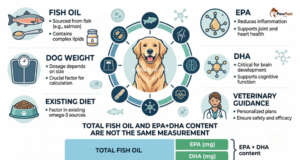
📊 Important Omega-3 Factors for Dogs
| Factor | Why It Matters |
|---|---|
| 🐕 Dog’s weight | Weight can be one factor when evaluating supplementation |
| 🧪 EPA content | Helps determine how much EPA the product provides |
| 🧪 DHA content | Helps determine how much DHA the product provides |
| 🧴 Product concentration | Different supplements provide different amounts per serving |
| 🍽️ Diet | Your dog’s existing diet may already contain omega-3 fatty acids |
| 🩺 Health condition | Some dogs may require individualized veterinary guidance |
| 💊 Other supplements/medications | Potential interactions should be considered |
🐕 Why Do Dogs Need Omega-3?
Omega-3 fatty acids are commonly included in discussions about canine nutrition because they are involved in normal inflammatory and cellular processes.
Pet owners may consider omega-3 supplements as part of their dog’s overall nutritional plan, particularly when discussing skin and coat health, joint support, and general nutrition with a veterinarian.
However, an omega-3 supplement should complement a balanced diet rather than replace proper nutrition or veterinary treatment.
Also check: Tramadol for Dogs Calculator & Dog Raisin Toxicity Calculator
✨ Potential Benefits of Omega-3 for Dogs
Omega-3 fatty acids may be considered for several areas of canine health, including:
- 🐾 Supporting normal skin and coat condition
- 🦴 Supporting joint health
- ❤️ Supporting overall nutritional health
- 🧠 Providing fatty acids important for normal cellular function
- 🐕 Complementing a balanced canine diet
The effect can vary between dogs, and supplements should be selected according to the individual dog’s needs.
❓ Frequently Asked Questions
1. Is fish oil the same as omega-3?
Not exactly. Fish oil is a source of fats that can contain omega-3 fatty acids, including EPA and DHA. The amount of EPA and DHA can vary substantially between products.
2. Should I calculate omega-3 based only on my dog’s weight?
Weight can be useful, but it should not be the only consideration. The supplement’s EPA/DHA concentration, your dog’s diet, health status, and other products being used can also matter.
3. What should I look for in an omega-3 supplement for dogs?
Look at the EPA and DHA amounts per serving, rather than focusing only on the total fish-oil amount. Also check the product’s quality information, expiration date, storage instructions, and feeding guidance.
4. Can I give my dog human fish oil?
Do not assume that a human supplement is appropriate for your dog. Products can contain different concentrations or additional ingredients. Ask your veterinarian before using a human supplement for your pet.
5. Can omega-3 supplements cause side effects in dogs?
Some dogs may experience digestive upset, particularly with larger amounts. If your dog develops vomiting, diarrhea, unusual behavior, or another concerning reaction after starting a supplement, contact your veterinarian.
🏁 Final Thoughts
The Omega-3 For Dogs Calculator can help make supplement labels easier to understand by focusing on your dog’s weight and the actual EPA/DHA content of the product.
Remember that omega-3 supplementation is not one-size-fits-all. Product concentration, existing diet, health conditions, medications, and your veterinarian’s recommendations should all be considered before deciding how much to give your dog.