
Cat Fish Oil Dosage Calculator
Calculate target EPA + DHA Omega-3 dosage based on your cat's body weight and health goals.
A Fish Oil Dosage Calculator for Cats is a screening tool that helps cat owners estimate how much fish oil or EPA and DHA omega-3 fatty acids a cat may receive based on its body weight and the concentration of the supplement. Fish oil is a source of the omega-3 fatty acids EPA (eicosapentaenoic acid) and DHA (docosahexaenoic acid), which are used in feline nutrition and may support areas such as skin, coat, and joint health.
Because fish-oil products vary greatly in concentration, there is no single universal mL dose that is appropriate for every cat or every product. Veterinary guidance should be used to determine the appropriate EPA+DHA amount for an individual cat.
For more useful ways to keep track of your pet’s everyday needs, explore our free pet care tools for pet owners.

🧮 How to Use the Fish Oil Dosage Calculator
Enter your cat’s:
- Body Weight – Use your cat’s current weight.
- Weight Unit – Select pounds or kilograms.
- EPA per mL – Find the EPA amount on your supplement label.
- DHA per mL – Enter the DHA amount listed on the product.
- Target EPA + DHA – If your veterinarian has given you a target amount, enter it here.
The calculator can then estimate the amount of EPA and DHA supplied by the selected amount of fish oil.
Always check the EPA and DHA content, rather than judging a supplement only by its total amount of fish oil. Different products can contain very different concentrations.
Check: Cat Quality of Life Calculator & Rat Cage Calculator
📊 Fish Oil vs. EPA & DHA
| 🐟 Component | What It Means |
|---|---|
| Fish Oil | The overall oil contained in the supplement |
| EPA | An omega-3 fatty acid involved in inflammatory processes |
| DHA | An omega-3 fatty acid important for several biological functions |
| EPA + DHA | The key omega-3 amounts commonly considered when evaluating fish-oil supplementation |
A product containing 1,000 mg of fish oil does not necessarily provide 1,000 mg of EPA and DHA. Always read the supplement’s guaranteed analysis or nutritional information.
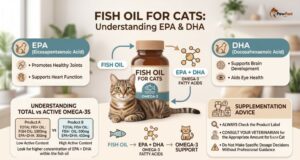
🐾 Potential Benefits of Fish Oil for Cats
✨ Skin & Coat Support
EPA and DHA are used in feline nutrition and may help support healthy skin and coat. Omega-3 fatty acids can also influence inflammatory processes associated with some skin conditions.
🦴 Joint Support
Omega-3 fatty acids, particularly EPA and DHA, may be incorporated into nutritional plans for cats with chronic joint inflammation. Your veterinarian can help determine whether supplementation is appropriate.
🧠 General Nutritional Support
DHA is an important omega-3 fatty acid for cats, and marine sources such as fish oil can provide EPA and DHA. However, many complete and balanced cat foods already contain omega-3 fatty acids.
Also check: Dog Chocolate Toxicity Calculator & Grain Bin Calculator
⚠️ Why Fish Oil Dosage Matters
Giving more fish oil is not automatically better. Supplements add calories and excessive amounts can cause digestive problems. High doses may also be associated with problems such as vomiting, diarrhea, lethargy, oily coat, and changes in bleeding or clotting.
Cats with certain health conditions or those taking medications may need additional caution. Veterinary guidance is particularly important if your cat has a bleeding or clotting disorder, pancreatitis, diabetes, diarrhea, or is taking anticoagulant or other medications.
❓ Frequently Asked Questions
1. How much fish oil can I give my cat?
There is no universal dose that applies to every cat. The appropriate amount depends on the cat, the reason for supplementation, and the specific EPA and DHA concentration of the product. Your veterinarian can recommend an appropriate target.
2. Is fish oil safe for cats?
Fish oil can be used in cats, but it should be given in appropriate amounts. Side effects can include gastrointestinal upset, fishy odor, oily coat, and, at excessive amounts, potentially more serious problems.
3. Should I calculate fish oil based on total oil or EPA and DHA?
EPA and DHA are more useful when evaluating the omega-3 contribution of a supplement because the total fish-oil amount does not tell you how much of these specific fatty acids it contains.
4. Can I give my cat human fish oil?
Do not assume that a human supplement is suitable for cats. Products can differ in concentration, ingredients, and additives. Ask your veterinarian before giving your cat a supplement intended for people.
5. What happens if my cat gets too much fish oil?
Excessive supplementation can cause digestive upset and other adverse effects. If your cat receives substantially more than intended or develops vomiting, diarrhea, unusual bruising, bleeding, weakness, or another concerning symptom, contact your veterinarian.
🏁 Conclusion
The Fish Oil Dosage Calculator for Cats can help you understand how a supplement’s EPA and DHA concentration relates to the amount of fish oil being provided. Since products vary significantly, use the calculator as an educational tool rather than a substitute for individualized veterinary dosing.
Before starting or changing fish-oil supplementation, check your product label and discuss the appropriate amount with your veterinarian—especially if your cat has an existing medical condition or takes medication.