
🐱 Cat Quality of Life Calculator
Rate each area from 0 to 10 based on your cat's recent condition. Higher scores indicate better quality-of-life indicators.
A Cat Quality of Life Calculator is a simple assessment tool that helps cat owners look at important parts of their cat’s daily well-being, including pain and comfort, appetite, hydration, mobility, grooming, happiness, and social behavior. It can be especially useful when you are monitoring an older cat or a cat experiencing ongoing health changes.
Our cat quality of life assessment gives each area a score from 0 to 10 and combines the results into an overall percentage. For more useful ways to keep track of your pet’s everyday needs, explore our free tools for pet owners.
Important: This calculator is an educational monitoring tool, not a veterinary diagnosis. A single score should never be used by itself to make medical or end-of-life decisions.

🧮 How to Use the Cat Quality of Life Calculator
Rate each category according to how your cat has been doing recently.
- 0 = Very Poor
- 5 = Fair/Average
- 10 = Excellent
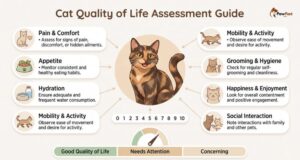
Try to think about your cat’s behavior over the past several days, rather than judging based on one unusual day. The calculator adds all seven categories for a maximum score of 70 points.
Check - Dog Quality of Life Calculator & How Much Dry Food to Feed a Cat Calculator
🐾 What Does the Calculator Assess?
❤️ Pain & Comfort
Consider whether your cat appears comfortable while resting and moving around. Cats can be very good at hiding pain, so changes such as unusual hiding, reluctance to move, or changes in normal behavior should not be ignored.
🍗 Appetite & Eating
Think about whether your cat is eating normally and showing its usual interest in food. A noticeable or persistent reduction in appetite can be an important sign that something may be wrong.
💧 Hydration
Consider whether your cat is drinking normally and maintaining its usual habits. Changes in drinking or other signs of dehydration should be discussed with a veterinarian.
🐾 Mobility & Activity
Look at how easily your cat walks, jumps, climbs, gets up, and moves around the home. Reduced movement or suddenly avoiding favorite places may indicate discomfort or illness.
🧼 Grooming & Hygiene
Healthy cats generally spend time grooming themselves. A cat that suddenly stops grooming, develops a messy coat, or struggles to maintain hygiene may need closer attention.
😊 Happiness & Enjoyment
Consider whether your cat still enjoys its usual activities, favorite sleeping spots, toys, treats, or interaction with family members.
🐱 Social Interaction & Behavior
Pay attention to changes in your cat’s normal personality. Increased hiding, unusual aggression, withdrawal, or reduced interaction can be meaningful changes.
💡 Why Track Your Cat’s Quality of Life?
A quality-of-life score can be useful for tracking changes over time. For example, instead of relying only on memory, you can repeat the assessment every few days or weekly and write down the results.
Looking at the overall trend can sometimes make changes easier to notice. It can also give you useful information to discuss with your veterinarian.
Related Posts
Cat Life Expectancy Calculator
📊 Cat Quality of Life Score Guide
| Score | General Meaning |
|---|---|
| 🟢 70–100% | Generally positive signs |
| 🟡 50–69% | Some areas need attention |
| 🔴 Below 50% | Several concerning areas |
These ranges are general indicators created for this calculator, not established veterinary diagnostic thresholds.
🚨 When Should You Contact a Veterinarian?
A calculator should never replace professional veterinary assessment. Contact your veterinarian if you notice persistent appetite changes, significant weight loss, difficulty breathing, severe pain, major mobility problems, repeated vomiting, unusual behavior, or other concerning changes.
If a change is sudden or your cat appears seriously unwell, seek veterinary care promptly rather than waiting for the quality-of-life score to change.
❓ Frequently Asked Questions
1. What is a good quality-of-life score for a cat?
A higher score indicates more positive signs across the areas included in this calculator. However, there is no single score that can determine whether a cat is healthy or whether treatment should continue.
2. How often should I use a cat quality-of-life calculator?
You can repeat the assessment regularly when monitoring an older cat or a cat with ongoing health concerns. Using the same criteria each time makes changes easier to track.
3. Can this calculator tell if my cat is in pain?
No. Cats can hide pain, and this calculator cannot diagnose pain or determine its severity. If you suspect your cat is uncomfortable, speak with your veterinarian.
4. What if my cat has a low score?
A low score suggests that several areas may need closer attention. Consider contacting your veterinarian to discuss the changes and your cat’s overall condition.
5. Can I use this calculator for an older cat?
Yes. It can be used as a general monitoring tool for senior cats, particularly when you want to keep track of changes in appetite, mobility, grooming, comfort, and behavior.
🏁 Conclusion
The Cat Quality of Life Calculator gives cat owners a simple way to review important aspects of their cat’s daily wellbeing. By checking comfort, appetite, hydration, mobility, grooming, happiness, and behavior, you can create a snapshot of how your cat has been doing.
Remember that the most useful information often comes from tracking changes over time and discussing concerning changes with your veterinarian.