
Dog Chocolate Toxicity Calculator
Estimate the risk level and theobromine toxicity for your dog.
A Dog Chocolate Toxicity Calculator is a helpful screening tool that estimates the potential risk after a dog eats chocolate. It uses important factors such as your dog’s body weight, the type of chocolate, and the amount of chocolate eaten to estimate the amount of methylxanthines—mainly theobromine and caffeine—your dog may have consumed.
For more helpful guidance and practical tools, you can also explore our collection of pet-care calculators designed to make everyday pet care a little easier.
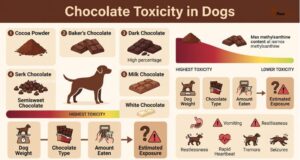
This chocolate toxicity calculator for dogs can help pet owners understand why the type and quantity of chocolate matter. Dark chocolate, baker’s chocolate, and cocoa powder generally contain much higher concentrations of methylxanthines than milk chocolate, so the same amount can present very different risks.
Important: This calculator is only an estimate and should not be used to decide whether veterinary care is necessary. If your dog has eaten chocolate, especially an unknown or potentially large amount, contact a veterinarian promptly.

🍫 Why Is Chocolate Toxic to Dogs?
Chocolate contains theobromine and caffeine, compounds that dogs process more slowly than people. In sufficient amounts, these substances can stimulate the nervous system and cardiovascular system and may cause vomiting, diarrhea, restlessness, rapid heart rate, tremors, seizures, and other serious problems.
The risk depends on the dog’s size, the type of chocolate, and the amount eaten. In general, chocolates with more cocoa contain more methylxanthines and therefore require less chocolate to potentially cause toxicity.
📊 Chocolate Types & Relative Risk
| 🍫 Chocolate Type | Relative Methylxanthine Content | General Risk |
|---|---|---|
| Cocoa powder | Very high | 🔴 Highest |
| Baker’s chocolate | Very high | 🔴 High |
| Dark chocolate | High | 🔴 High |
| Semisweet chocolate | Moderate–high | 🟠 Significant |
| Milk chocolate | Lower | 🟡 Still potentially toxic |
| White chocolate | Very low | 🟢 Low methylxanthine content |
White chocolate contains very little theobromine and caffeine, but that does not mean chocolate products are automatically safe for dogs. High fat and sugar content can still cause gastrointestinal problems, and some products may contain other dangerous ingredients.
Check: Western Saddle Size Calculator & Dog Quality of Life Calculator
🧮 How to Use the Chocolate Toxicity Calculator
Enter the information requested by the calculator:
- Dog’s Weight – Enter your dog’s current body weight.
- Chocolate Type – Select the type of chocolate that was eaten.
- Amount Eaten – Enter the approximate amount your dog consumed.
- Unit – Use the available weight unit options.
The calculator then provides an estimated methylxanthine exposure and risk level based on the information entered.
If you are unsure about the chocolate type or quantity, do not assume that the exposure is safe. Try to identify the product and check its packaging before speaking with your veterinarian.
⚠️ Signs of Chocolate Poisoning in Dogs
Symptoms can develop several hours after ingestion. Reported signs include:
- 🤢 Vomiting or diarrhea
- 💧 Increased thirst or urination
- 😰 Restlessness or agitation
- ❤️ Rapid or abnormal heartbeat
- 🐕 Hyperactivity or weakness
- 💪 Muscle tremors
- 🧠 Seizures
- 🌡️ Increased body temperature
Clinical signs commonly begin within 6–12 hours, although the timing can vary. Severe poisoning can result in serious heart rhythm abnormalities, seizures, and potentially death.
Also check: Grain Bin Calculator & Dry Matter Calculator
🚨 What to Do If Your Dog Eats Chocolate
If your dog has eaten chocolate, contact your veterinarian as soon as possible rather than waiting for symptoms to appear. Keep the chocolate packaging because the product type, cocoa content, amount, and additional ingredients can help the veterinarian assess the exposure.
Pay particular attention to products that may contain xylitol, raisins, or macadamia nuts, because these ingredients can create additional toxicity concerns for dogs.
Do not rely on the calculator alone to determine that your dog is safe.
❓ Frequently Asked Questions
1. How much chocolate is toxic to a dog?
There is no single amount that is safe for every dog. Risk depends on the dog’s body weight, chocolate type, amount consumed, and individual sensitivity. Darker chocolate and cocoa products generally contain more methylxanthines.
2. Is dark chocolate more dangerous than milk chocolate?
Yes. Dark and baking chocolates generally contain substantially more theobromine and caffeine than milk chocolate, so smaller quantities can create a greater exposure.
3. Is white chocolate safe for dogs?
White chocolate contains very little theobromine compared with darker chocolate, but it can still contain high amounts of fat and sugar, and some products may contain other harmful ingredients. It should not be intentionally given to dogs.
4. How long after eating chocolate can symptoms appear?
Signs of chocolate toxicosis commonly appear within about 6–12 hours, although the timing can vary. A dog appearing normal immediately after eating chocolate does not necessarily mean there is no risk.
5. Should I wait for symptoms before contacting a veterinarian?
No. If you know or suspect that your dog has eaten chocolate, contact your veterinarian promptly. Early assessment can help determine whether treatment or monitoring is needed.
🏁 Conclusion
The Dog Chocolate Toxicity Calculator provides a quick way to estimate potential chocolate exposure using your dog’s weight, the type of chocolate, and the amount consumed. It can help you understand why different chocolate products carry different levels of risk, but it is not a substitute for professional veterinary advice.
If your dog has actually eaten chocolate, especially dark chocolate, baker’s chocolate, cocoa powder, or an unknown quantity, contact a veterinarian promptly instead of relying on the calculator result alone