
🦗 Crickets Chirping Thermometer
Did you know that crickets can help you estimate the outdoor temperature? Certain cricket species chirp more frequently as the air gets warmer. This fascinating relationship, known as Dolbear’s Law, has been used for over a century to estimate temperature based on the number of cricket chirps.
Our Crickets Chirping Thermometer (also called the Cricket Chirp Temperature Calculator) uses this scientific principle to estimate the outdoor temperature in both Celsius (°C) and Fahrenheit (°F).
Whether you’re a nature enthusiast, student, camper, or simply curious about the science behind cricket chirps, this calculator makes it quick and fun to estimate the temperature.
👉 Explore more animal and nature calculators on our website.
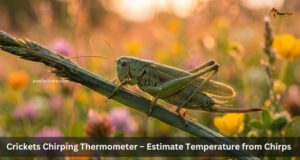
🌡️ What Is a Cricket’s Chirping Thermometer?
A Crickets Chirping Thermometer estimates the air temperature by counting how many times a cricket chirps within a specific time period.
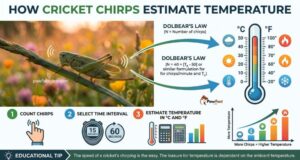
The calculator uses Dolbear’s Law, which observed that the chirping rate of certain cricket species increases as temperatures rise.
The calculator estimates:
- Temperature in Celsius
- Temperature in Fahrenheit
- Chirps per minute
- General weather feeling
Check this post - Bird Age Calculator
⚙️ How the Calculator Works
Using the calculator is simple.
Count the Chirps
Listen to a single cricket and count how many chirps you hear.
Choose the Time Interval
Select whether you counted chirps over:
- 15 seconds
- 30 seconds
- 60 seconds
View Your Results
The calculator estimates:
- Chirps per minute
- Estimated temperature in °F
- Estimated temperature in °C
- Weather description
📚 What Is Dolbear’s Law?
Dolbear’s Law is an empirical formula developed by physicist Amos Dolbear in 1897 after observing that the chirping frequency of certain crickets changes with air temperature.
In general:
- More chirps = warmer temperatures
- Fewer chirps = cooler temperatures
While the relationship isn’t perfect for every species, it provides a surprisingly accurate estimate under the right conditions.
🔗 Related Nature & Pet Calculators
- Aquarium Water Change Calculator
- Bird Cage Size Calculator
- Aquarium Fish Stocking Calculator
- Turtle Feeding Calculator
❓ Frequently Asked Questions (FAQs)
1. Can cricket chirps really estimate temperature?
Yes. Certain cricket species show a strong relationship between chirping frequency and air temperature, making Dolbear’s Law a useful approximation.
2. Does this work for every cricket species?
No. The formula works best for snowy tree crickets and may be less accurate for other species.
3. Can I use this indoors?
The calculator is intended for outdoor conditions where crickets behave naturally.
4. Why do crickets chirp more in warm weather?
Warmer temperatures increase the speed of muscle activity, allowing crickets to chirp more frequently.
5. Is this as accurate as a real thermometer?
No. This calculator provides an educational estimate and should not replace a standard thermometer for precise temperature measurements.
🏁 Conclusion
The Crickets Chirping Thermometer is a fun and educational way to estimate outdoor temperature using the natural chirping behavior of crickets. Based on Dolbear’s Law, it converts chirp counts into approximate temperatures in both Celsius and Fahrenheit while demonstrating one of nature’s most fascinating scientific relationships.
Whether you’re exploring nature, teaching science, or simply satisfying your curiosity, this calculator offers an engaging way to connect wildlife with weather.