
🐶 Dog Color Genetics Calculator
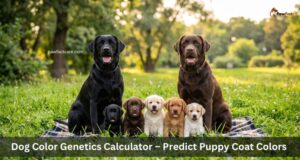
Have you ever wondered what color your puppies might be? A dog’s coat color is determined by the combination of genes inherited from both parents. While genetics can be complex, our Dog Color Genetics Calculator provides a simple way to estimate the possible coat colors your puppies may inherit based on the parents’ coat colors.
Whether you’re a dog breeder, a future puppy owner, or simply curious about canine genetics, this calculator offers a fun and educational look at how coat color inheritance works.
👉 Explore more dog genetics, breeding, and health calculators on our website.
📊 Why Use a Dog Color Genetics Calculator?
A Dog Color Genetics Calculator helps estimate the most likely coat colors that may appear in a litter based on the parents’ visible coat colors.
This calculator helps you:
- Predict possible puppy coat colors
- Learn the basics of canine genetics
- Understand dominant and recessive traits
- Explore breeding outcomes
- Compare different parent color combinations
Keep in mind that real coat color inheritance depends on many genes, so predictions are estimates rather than guarantees.
⚙️ How the Dog Color Genetics Calculator Works
This puppy color genetics calculator uses the visible coat colors of both parents to estimate potential puppy coat color outcomes.
Parent 1 Coat Color
Select the primary coat color of the first parent.
Parent 2 Coat Color
Choose the coat color of the second parent.
Breed Size
Breed size is included for reference, although coat color is primarily determined by genetics rather than size.
The calculator estimates:
- Possible puppy coat colors
- Approximate probability for each color
- General genetics information
Related Dog Calculators
- Dog Age Calculator
- Dog Pregnancy Calculator
- Dog Gestation Calculator
- Dog Size Calculator
- Puppy Weight Calculator
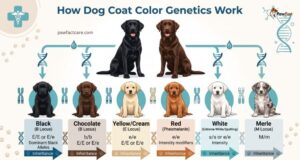
🧬 How Dog Coat Color Genetics Work
Dog coat color is controlled by several different genes working together.
Some of the most important genetic loci include:
- B Locus – Determines black or brown (chocolate) pigment.
- E Locus – Controls whether dark pigment is expressed.
- K Locus – Influences dominant black coloring.
- A Locus – Controls patterns such as sable and tan points.
- D Locus – Affects color dilution (for example, blue or lilac).
- M Locus – Produces the merle pattern.
- S Locus – Controls white spotting.
Each puppy inherits one copy of each gene from each parent, creating unique color combinations even within the same litter.
🎨 Common Dog Coat Colors
| Coat Color | Description |
|---|---|
| Black | Solid black pigmentation |
| Brown (Chocolate) | Rich brown coat caused by recessive genes |
| Yellow / Cream | Light cream to golden shades |
| Red | Deep red or reddish-gold coat |
| White | Mostly white coat with little pigment |
| Merle | Marbled coat pattern with patches of color |
💡 Interesting Dog Genetics Facts
Littermates Can Look Completely Different
Puppies from the same litter may inherit different gene combinations, resulting in a wide variety of coat colors.
Merle Should Be Bred Carefully
Breeding two merle dogs together increases the risk of puppies with serious hearing and vision problems.
DNA Testing Provides Better Accuracy
Modern canine DNA testing can identify hidden genes and provide much more accurate color predictions than appearance alone.
Coat Color Does Not Determine Personality
A dog’s temperament is influenced by genetics, environment, training, and socialization—not coat color.
❓ Frequently Asked Questions (FAQs)
1. Can this calculator predict puppy colors exactly?
No. It provides general estimates based on visible parent colors. Hidden recessive genes may produce unexpected coat colors.
2. Why do puppies in the same litter have different colors?
Each puppy receives a unique combination of genes from both parents, leading to different coat color outcomes.
3. Can two black dogs have brown puppies?
Yes. If both parents carry the recessive brown gene, brown puppies are possible.
4. What is the merle gene?
The merle gene creates a mottled or marbled coat pattern. Responsible breeding is important because breeding two merle dogs together can increase the risk of health problems.
5. Can DNA testing improve color predictions?
Yes. Genetic testing identifies hidden genes that cannot be determined by coat color alone, making predictions much more accurate.
🏁 Conclusion
A Dog Color Genetics Calculator offers a fun and educational way to explore the possible coat colors your puppies may inherit based on their parents’ appearance. While real canine coat color genetics involve multiple interacting genes, this calculator provides a simple introduction to how inheritance works.
For breeding decisions and the most accurate color predictions, consult breed-specific genetic information and consider professional canine DNA testing.