
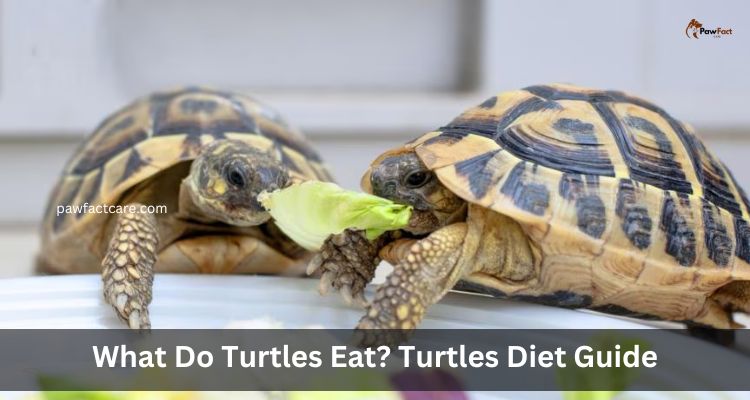
When I first thought about keeping a turtle, I honestly assumed they just eat “anything green.” But once I started learning more, I realized turtle diets are actually very specific and depend a lot on their type, age, and habitat.
Some turtles need more protein, while others prefer plant-based food. Feeding the wrong diet can lead to serious health issues like weak shells or poor growth.
In this guide, I’ll explain in a simple way what turtles eat, what you should avoid, and how to build a proper feeding routine without confusion.
👉 For more simple pet care guides and helpful tips, explore PawFactCare.
What Do Turtles Eat Daily
Leafy Greens and Vegetables
Most pet turtles, especially adult ones, need a good amount of leafy greens. Foods like lettuce, spinach, and kale are commonly given. Turtles enjoy variety, so mixing different vegetables keeps them interested and ensures balanced nutrition.
Protein Sources (Important for Growth)
Turtles, especially younger ones, need protein for proper growth. This can include insects, worms, or commercial turtle food. Baby turtles are much more active eaters when protein is included regularly in their diet.
Commercial Turtle Pellets
Pellets are a convenient and balanced option. They contain essential nutrients, vitamins, and minerals. However, they should not be the only food. I personally prefer using pellets as a supplement rather than the main diet.
Fresh Water
For aquatic turtles, clean water is extremely important. They often eat in water, so keeping it clean helps prevent health issues. Regularly changing water is something many beginners overlook, but it makes a big difference.
What Do Turtles Eat by Age
Baby Turtles (High Protein Needs)
Baby turtles need more protein compared to adults. Their bodies are growing quickly, so protein helps in development. They usually prefer insects and protein-rich food more than vegetables at this stage.
Juvenile Turtles (Balanced Diet)
As turtles grow, their diet starts to balance between protein and vegetables. From my experience, this is the stage where introducing variety really helps in shaping healthy eating habits.
Adult Turtles (More Plant-Based)
Adult turtles tend to shift more towards plant-based food. Vegetables and greens become a major part of their diet. Protein is still important, but should be given in smaller amounts compared to younger turtles.
Different Species Differences
Not all turtles eat the same way. Aquatic turtles and land turtles (tortoises) have slightly different diets. So it’s always good to understand your turtle’s specific type before deciding the exact food plan.
Check this post - What Do Rabbits Eat
Foods Turtles Can Eat
Safe Vegetables
Lettuce, kale, cucumber, and carrots are safe and commonly fed. These provide important vitamins and help maintain overall health.
Fruits (Occasionally)
Fruits like apples, berries, and bananas can be given in small amounts. They are more like treats because of their sugar content.
Protein Foods
Insects, worms, and small fish are good protein sources. Especially useful for younger turtles and active species.
Commercial Foods
Ready-made turtle food is a safe and balanced option. Just make sure it’s from a good brand and not the only food source.
Aquatic Plants
For aquatic turtles, plants like duckweed can be a natural food source. I’ve seen turtles enjoy nibbling on these throughout the day.
Foods Turtles Should NOT Eat
Processed Human Food
Foods like chips, bread, or cooked items are not suitable for turtles. These can harm their digestive system.
Dairy Products
Turtles cannot digest dairy products at all. Milk or cheese should always be avoided.
Salty or Sugary Food
Too much salt or sugar can cause serious health issues. Even small amounts regularly can be harmful.
Turtle Feeding Chart
| Age | Diet Type | Feeding Frequency |
|---|---|---|
| Baby | High protein + some greens | Daily |
| Juvenile | Balanced (protein + veggies) | Daily |
| Adult | Mostly vegetables + less protein | 4–5 times/week |
👉 This chart helps you quickly understand how feeding changes with age.
Factors That Affect Turtle Diet
Species Type
Not all turtles eat the same food, and this is something many beginners overlook. Aquatic turtles usually need more protein-based food, while land turtles (tortoises) mostly prefer plant-based diets. It’s always important to first understand what type of turtle you have.
Age and Growth Stage
A turtle’s diet changes a lot as it grows. Baby turtles need more protein because their bodies are developing quickly, while adult turtles shift more towards vegetables. Adjusting the diet based on age makes a big difference in their growth.
Environment and Temperature
Turtles are cold-blooded animals, so their eating habits depend on temperature. In colder conditions, they tend to eat less because their metabolism slows down. During warmer days, their appetite increases. I’ve seen turtles become less active and eat very little in winter, which is completely normal.
Activity Level
Active turtles naturally require more food compared to less active ones. If your turtle moves around a lot, swims, or explores, it will burn more energy.
Food Quality and Variety
Fresh vegetables and good-quality pellets provide better nutrition than stale or low-quality food. Turtles enjoy variety, and mixing different foods keeps them interested while ensuring they get balanced nutrients.

Common Feeding Mistakes Turtle Owners Make
Overfeeding Protein
One of the most common mistakes is giving too much protein, especially to adult turtles. While protein is important, excess amounts can cause shell deformities and health issues. From what I’ve seen, many owners think more protein means better growth, but balance is actually the key to a healthy turtle.
Ignoring Vegetables
Some owners rely only on pellets or protein-based food and completely ignore vegetables. This leads to an unbalanced diet lacking essential nutrients. Vegetables should be a major part of an adult turtle’s diet.
Feeding Too Often
Feeding turtles too frequently can lead to obesity and digestive problems. Unlike dogs or cats, turtles don’t need to eat multiple times a day.
Not Cleaning Feeding Water
For aquatic turtles, dirty water is a serious issue. Since they eat in water, leftover food can quickly make it unhygienic. This not only affects their health but also reduces their appetite. Regular cleaning makes a noticeable difference in their eating behavior.
Giving Human Food
Many beginners try feeding turtles leftover human food, thinking it’s harmless. But most human food contains salt, spices, or oil, which can be harmful. Sticking to natural and recommended foods is always the safest option for long-term health.
You can also read about - Complete Diet & Feeding Guide for Guinea Pig
💡 Pet Owner Tip
👉 I personally found that keeping a simple mix of vegetables + protein + pellets works best. Once you observe your turtle’s eating habits, it becomes much easier to adjust the diet naturally.
Frequently Asked Questions
1. What is the main food for turtles?
The main food depends on the turtle’s age, but generally includes vegetables, protein, and pellets. In my experience, balance is the key.
2. Can turtles eat fruits daily?
No, fruits should only be given occasionally because of their sugar content.
3. How often should I feed my turtle?
Baby turtles eat daily, while adult turtles can be fed 4–5 times a week.
4. Do turtles need protein?
Yes, especially younger turtles. Protein supports growth and development.
5. Can turtles eat human food?
No, most human food is not suitable and can be harmful.
Conclusion
Feeding your turtle correctly doesn’t have to be complicated. Once you understand their age, species, and basic needs, it becomes much easier to provide a balanced diet.
From my experience, a mix of fresh vegetables, protein, and a proper feeding routine keeps turtles active and healthy. Small adjustments in diet can make a big difference in their overall life ❤️
